

For many women, the idea of early retirement—whether at age 55, 60, or even sooner—is not just a luxury. It’s a powerful goal rooted in financial empowerment, freedom, and long-term security. Yet systemic challenges like the gender pay gap, career interruptions for caregiving, and longer life expectancy make this dream harder to achieve. That’s why early, proactive planning matters more than ever for women seeking financial independence, peace of mind, and the ability to control their future.
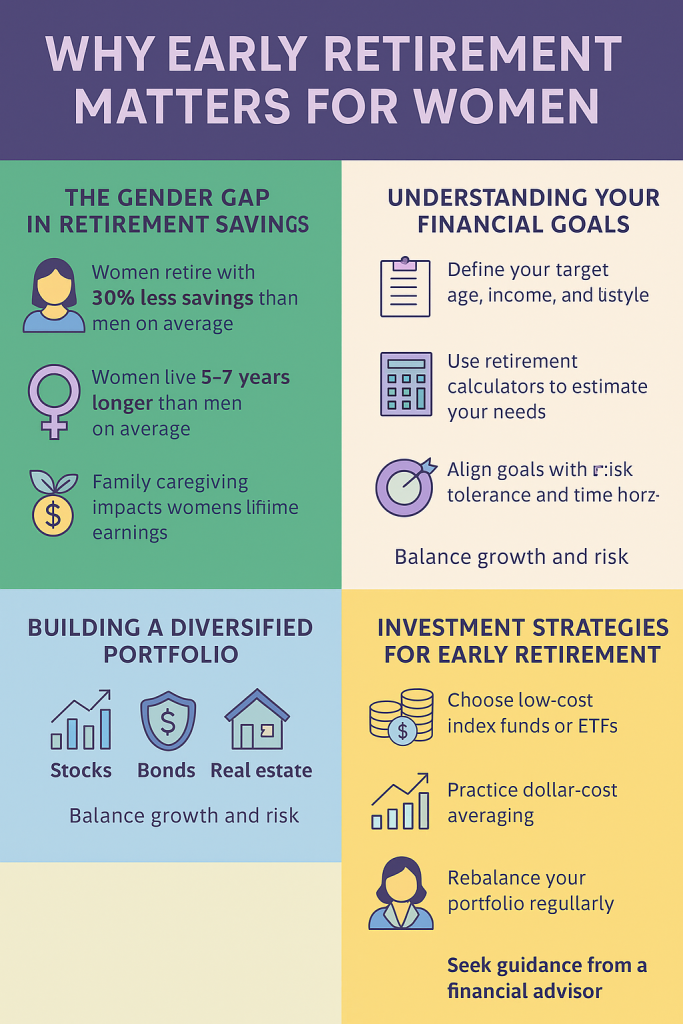
Powerful Facts: The Gender Gap in Retirement Savings
- Women retire with roughly 30% less savings than men on average
- On average, women live 5–7 years longer than men, meaning more years to fund—or risk outliving—retirement assets
- A career break of even one year to care for children or elders can reduce lifetime earnings and retirement contributions by $100,000 or more
These statistics highlight why closing the retirement savings gap is not optional—it’s essential for long-term financial security.
Understanding Your Financial Goals
1. Define “Early Retirement” on Your Terms
What does early retirement mean to you? It begins with clarity:
- At what age do you want to stop working?
- What annual income will sustain your lifestyle—travel, healthcare, hobbies?
- Will you downsize, relocate, start a business, or enjoy more family time?
Answering these questions helps you reverse-engineer your retirement goals with precision and purpose.
2. Use Retirement Calculators to Forecast Needs
Online tools (like FIRECalc, Vanguard’s Retirement Nest Egg Calculator, or NerdWallet) help estimate:
- How much to save per year
- When you can realistically retire
- How different scenarios (market growth, inflation, spending patterns) affect outcomes
By running multiple scenarios, you can prepare for both best-case and worst-case outcomes with confidence.
3. Match Your Goals with Your Risk Tolerance
If you’re in your 30s and aiming to retire at 60, your portfolio can tolerate more growth assets early on. But if you’re in your 50s, capital preservation and income stability become more important. Align your goals with the right mix of aggressive versus conservative investments.
Building a Diversified Portfolio
To reach early retirement, women benefit from diversified investments that balance growth with risk reduction.
1. Stocks and Equities
- High-growth potential and essential for long-term wealth building
- Includes single stocks, index funds, and ETFs
- Consider S&P 500 ETFs or total market funds for broad exposure
2. Bonds and Fixed Income
- Helps stabilize your portfolio during market downturns
- Includes government and corporate bonds
- Ideal for preserving wealth as you near retirement age
3. Real Estate
- Offers income through rentals and long-term diversification
- Can include physical property or REITs (Real Estate Investment Trusts)
- Requires research and management but offers steady returns over time
4. Alternative Investments
- Assets like commodities, peer-to-peer lending, or private equity
- Often higher risk and complexity—invest cautiously and in small amounts
Why Diversify?
- Reduces risk by avoiding over-reliance on a single asset class
- Leverages market growth while cushioning against volatility
- Helps create a more resilient portfolio over time

Investment Strategies for Early Retirement
1. Use Low-Cost Index Funds and ETFs
- Lower fees help more of your money stay invested and grow
- ETFs like Vanguard Total Stock Market ETF (VTI) and Fidelity Total Bond Fund (FBND) are smart long-term options
2. Practice Dollar-Cost Averaging
- Invest a set amount regularly, regardless of market performance
- Helps avoid emotional investing and smooths out market volatility
3. Rebalance Your Portfolio Consistently
- Periodically adjust your investments to match your goals and timeline
- Avoid being overexposed to any one type of asset class
4. Work with a Financial Advisor
- Especially valuable for navigating complex investment strategies, tax planning, or managing significant assets
- Look for a fiduciary advisor who is legally obligated to act in your best interest
Actionable Steps and Resources
What You Can Do Right Now
- Clarify your retirement goal: Choose a target age and income
- Audit your current finances: Understand your net worth, savings rate, and spending
- Automate your savings: Direct at least 15–20% of income into retirement accounts
- Diversify your investments: Balance stocks, bonds, real estate, and other assets
- Track your progress monthly: Stay consistent and make adjustments as needed
Top Resources to Support Your Journey
- FIRECalc – retirement scenario simulator
- Vanguard and Fidelity – low-cost investment platforms
- Bogleheads Forum – trusted community for independent investing guidance
- Women’s Institute for a Secure Retirement (WISER) – tailored financial education
- ChooseFI – podcasts and resources for financial independence
Final Thoughts: Take Charge of Your Financial Future
Early retirement isn’t about escaping work—it’s about having choice, control, and alignment in how you spend your time. For women, it’s especially impactful: fewer financial worries, more freedom for family, travel, passions, and a longer, more secure life.
To bridge the gender retirement gap, you don’t need a windfall or perfect timing. You need:
- Clarity on your financial goals
- A disciplined savings and investment plan
- A mindset focused on consistency, not perfection
Your journey to financial independence starts with one step. Whether you’re in your 20s, 30s, 40s, or beyond, now is the time to take control of your financial future. Time is your most valuable asset—use it wisely, and you’ll create a life of freedom, security, and lasting wealth.